Global Fallout as Trump Imposes New Double-Digit Tariffs on 80 Nations
By TopHolding Editorial · Thursday, July 30, 2026 at 7:02 AM
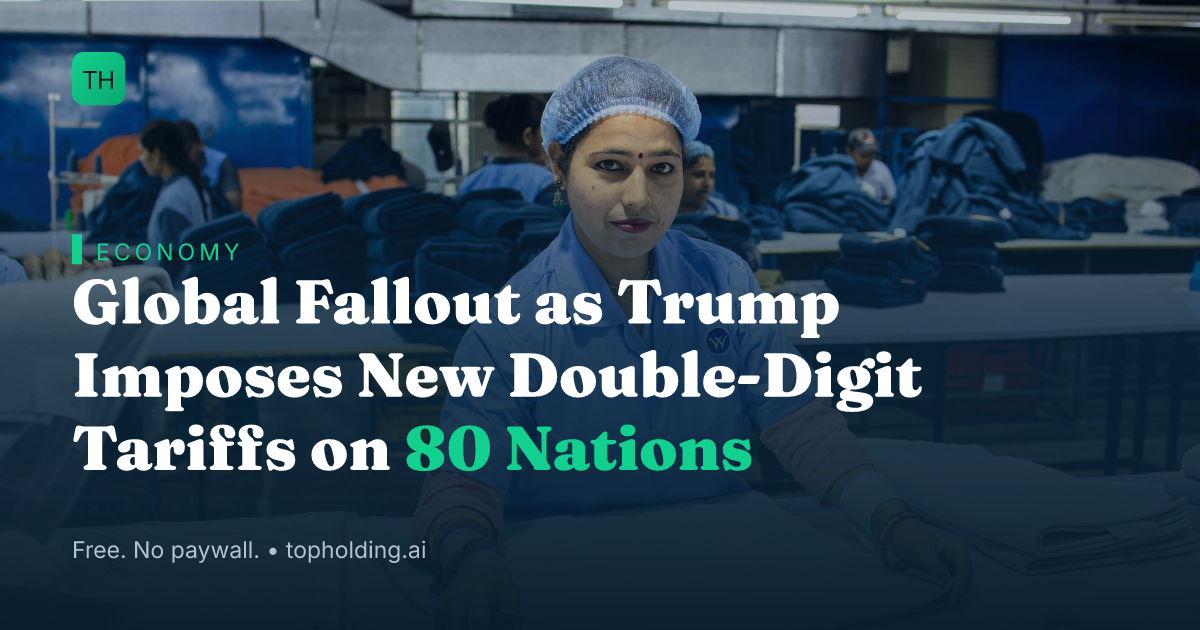
Global leaders express disappointment as the U.S. imposes new 10% to 12.5% tariffs on 80 countries, citing trade concerns and labor standards.
Global trade partners have reacted with alarm and "extreme disappointment" as U.S. President Donald Trump finalized a new round of double-digit tariffs on goods from over 80 countries. The measures, which impose levies ranging from 10% to 12.5%, are part of a broader "America First" trade policy that has thrown international markets into a state of flux. The administration justified the move by claiming several partners lack adequate systems to prohibit products made with forced labor.
The response from allies has been swift and critical. New Zealand Prime Minister Christopher Luxon described the move as disappointing, while Japan’s Chief Cabinet Secretary Minoru Kihara rejected the forced labor allegations, stating that Japanese industry operates under strict international norms. However, Japan noted it had secured assurances that total tariffs would not exceed a previously agreed 15% cap. Australia has also pledged to continue lobbying Washington for a reversal, specifically defending its exports of beef, gold, and copper.
The European Commission offered a more measured response, stating that the new policy currently appears to remain within the bounds of existing U.S.-EU trade frameworks. Conversely, China’s Ministry of Foreign Affairs rebuked the 12.5% levy, warning that "trade wars do not serve any parties’ interests." This latest escalation comes ahead of a highly anticipated meeting between President Trump and President Xi Jinping scheduled for September.
Domestic impacts are already being felt across various sectors. The price of energy and imported consumer goods has seen upward pressure, contributing to a volatile economic landscape. While some U.S.-UK trade exemptions remain in place, the broader global trend points toward increasing protectionism and the potential for retaliatory measures from America’s largest trading partners.