Retirement Planning: Why Financial Security Isn't Enough to Quit
By TopHolding Editorial · Tuesday, July 28, 2026 at 3:01 AM
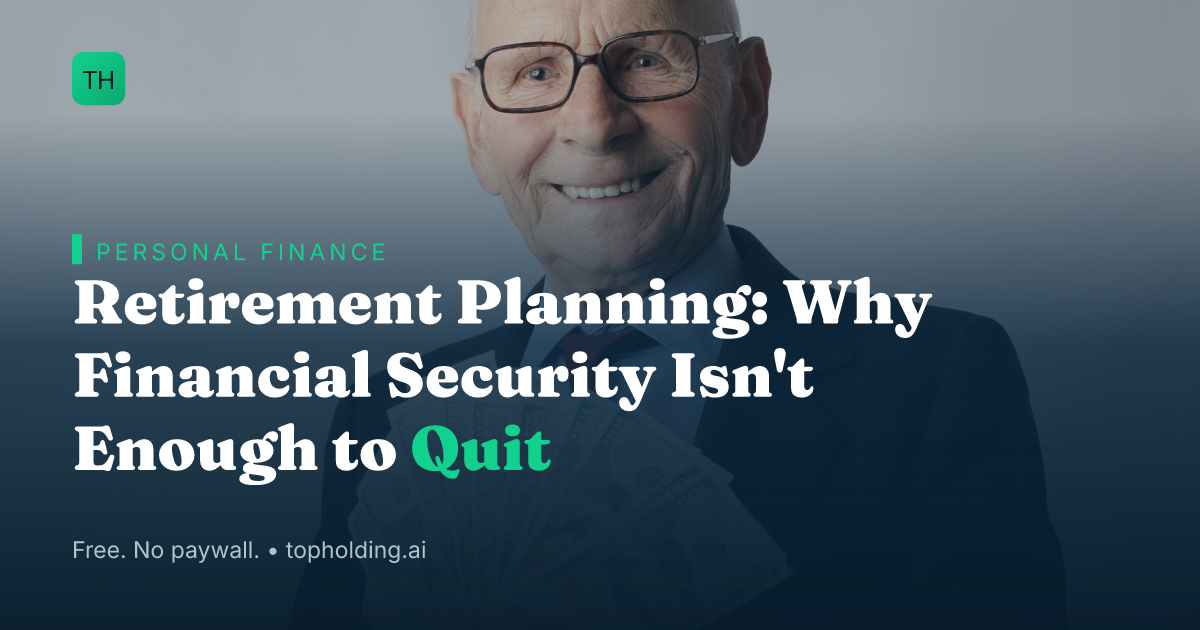
Wealthy professionals often struggle to retire due to psychological barriers; a successful plan requires balancing numbers with personal fulfillment.
For high-earning professionals, the transition to retirement is often more of a psychological hurdle than a financial one. A recent study highlights the "burned out" executive—someone in their late 40s or early 50s with significant assets who feels unable to quit due to a lack of a non-numeric plan. Financial security does not automatically translate to a feeling of safety, often due to a lack of clarity regarding personal goals beyond the workplace.
A robust retirement plan must incorporate the "me-first" rule: ensuring that your own long-term healthcare and lifestyle needs are fully funded before committing to large inheritance transfers. Advisors suggest that evaluating financial fortitude involves more than just hitting a "number"; it requires defining what a successful post-work life looks like. Without this definition, many wealthy individuals remain trapped in high-stress roles despite having the means to depart.
The emotional side of retirement planning is often overlooked in favor of spreadsheets, but it is the primary driver of satisfaction. Professionals should challenge themselves to think about how they will spend their time, not just their money, to ensure a smooth transition from a high-stakes career to a fulfilling retirement.