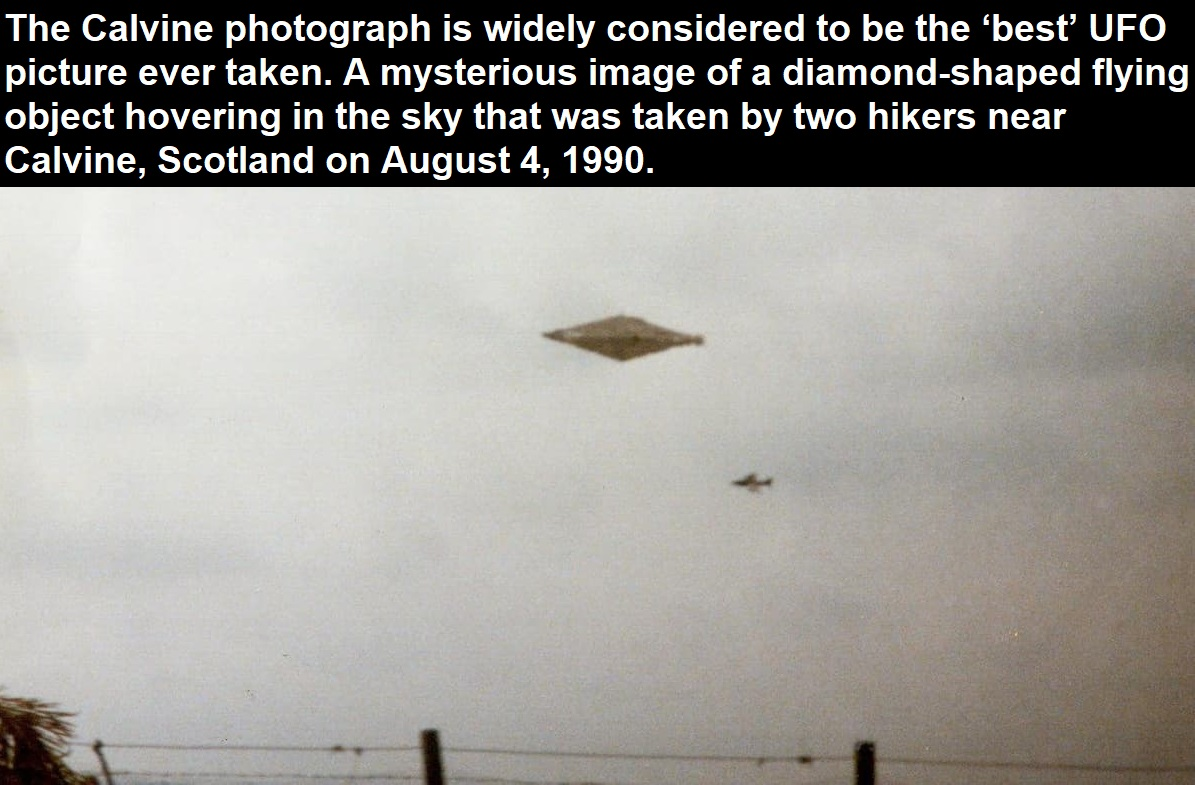
President Trump declassified over 170 government files on UFOs
By TopHolding Editorial · Friday, May 8, 2026 at 12:28 PM
President Trump and Defense Secretary Pete Hegseth declassified roughly 170 files on unidentified anomalous phenomena, including Apollo-era photos, infrared cockpit footage and eyewitness sketches of an ellipsoid metallic object.
The Pentagon on Friday began publishing what it called a “never-before-seen” trove of files on unidentified anomalous phenomena (UAP) — better known to most Americans as UFOs — opening a window onto material the U.S. government has guarded for decades.
President Donald Trump and Defense Secretary Pete Hegseth framed the release as a step toward “unprecedented transparency.” Roughly 170 documents, photos and videos went live on a dedicated government portal at war.gov/UFO, with officials promising additional drops on a rolling basis and a second tranche expected in about 30 days.
Among the highlights: a photograph of “unidentified phenomena” taken from the lunar surface during the 1969 Apollo 12 mission, and a transcript from Apollo 17 in which pilot Ronald Evans reported "a few very bright particles or fragments or something that go drifting by as we maneuver." Mission control’s reply was characteristically terse: "Roger. Understand."
The newly public material also includes a one-minute, 39-second clip of infrared video captured by a U.S. military platform in 2024 and submitted to the All-Domain Anomaly Resolution Office (AARO), along with composite eyewitness sketches — including a striking ellipsoid metallic object reported in September 2023.
"These files, hidden behind classifications, have long fueled justified speculation — and it's time the American people see it for themselves," Hegseth said in a statement. Trump, in his own remarks, told the public to "have fun and enjoy" while deciding for themselves "WHAT THE HELL IS GOING ON?"
The interagency effort has its own acronym — PURSUE, the Presidential Unsealings and Reporting System for UAP Encounters — and appears to borrow its release model from the Justice Department’s ongoing Epstein files disclosures. Lawmakers including Representatives Tim Burchett and Anna Paulina Luna, longtime advocates for declassification, welcomed the move.
Not everyone is impressed. Critics, including former Republican Representative Marjorie Taylor Greene, dismissed the release as a distraction from harder political questions, from the unpopular U.S. military campaign against Iran to continued pressure for further Epstein-related disclosures. The Pentagon also cautioned that while every file has been reviewed for security, "many of the materials have not yet been analyzed for resolution of any anomalies" — meaning the public is, in effect, being handed the raw record and asked to draw its own conclusions.
For a topic that has hovered between national-security curiosity and pop-culture obsession for generations, that may be the most consequential shift of all: the burden of interpretation is moving from classified vaults to the open web.